Orbital Launch Vehicles
The Fundamentals of Reaching Orbit
An orbital launch vehicle is arguably the most demanding engineering challenge humanity undertakes on a routine basis. The objective is deceptively simple: accelerate a payload to approximately 28,000 kilometers per hour (orbital velocity) while elevating it above the denser layers of the Earth's atmosphere. Achieving this, however, requires mastering thermodynamics, metallurgy, fluid dynamics, and orbital mechanics simultaneously.
The core governing principle of any launch vehicle is the Tsiolkovsky Rocket Equation. This mathematical relationship illustrates the absolute tyranny of mass. To increase the velocity of a rocket (Delta-v), you must either increase the exhaust velocity of your propellant (efficiency) or increase the mass ratio (the ratio of a fully fueled rocket to an empty one). Because chemical propellants have a theoretical maximum efficiency, engineers must resort to extreme structural optimization to improve the mass ratio.
Staging Architectures
Because the structural mass required to contain enough fuel to reach orbit in a single stage is prohibitively high, multi-stage architectures are mandatory. A Single-Stage-To-Orbit (SSTO) vehicle remains a theoretical holy grail, unachieved due to current material science limitations.
Instead, launch vehicles discard dead weight as they fly. The typical configuration involves a massive lower stage (or first stage) that provides the raw thrust required to push through the thickest part of the atmosphere. This stage usually employs densely packed propellants like RP-1 (a highly refined kerosene) and liquid oxygen. These provide immense thrust-to-weight ratios but relatively lower specific impulse (efficiency).
Once the atmosphere thins and the first stage exhausts its fuel, it is jettisoned. The upper stage then ignites. Because it operates in a vacuum, upper stage engines are equipped with highly expanded engine bells to maximize the extraction of thrust from the exhaust gases. Upper stages frequently utilize Liquid Hydrogen and Liquid Oxygen (hydrolox), which offers superior specific impulse, allowing the vehicle to efficiently build the remaining lateral velocity required to maintain orbit.
Propellant Choices and Handling
The choice of propellant dictates the entire design of the launch vehicle. It influences the size of the tanks, the thermal protection required, and the complexity of the turbopumps.
- Kerolox (RP-1/LOX): Dense, manageable, and highly thrust-efficient at sea level. However, it burns relatively "dirty," creating soot (coking) which can complicate engine reuse.
- Hydrolox (LH2/LOX): Offers incredible efficiency (Specific Impulse) but presents massive engineering headaches. Liquid hydrogen is extraordinarily not dense, requiring massive tanks. It must be kept at -253°C, necessitating heavy insulation, and its small molecular size means it leaks through microscopic gaps.
- Methalox (Liquid Methane/LOX): The modern compromise. Methane is denser than hydrogen, cleaner burning than RP-1, and possesses a boiling point similar to Liquid Oxygen, allowing for common bulkheads and shared insulation schemes.
Structural Engineering Under Extreme Load
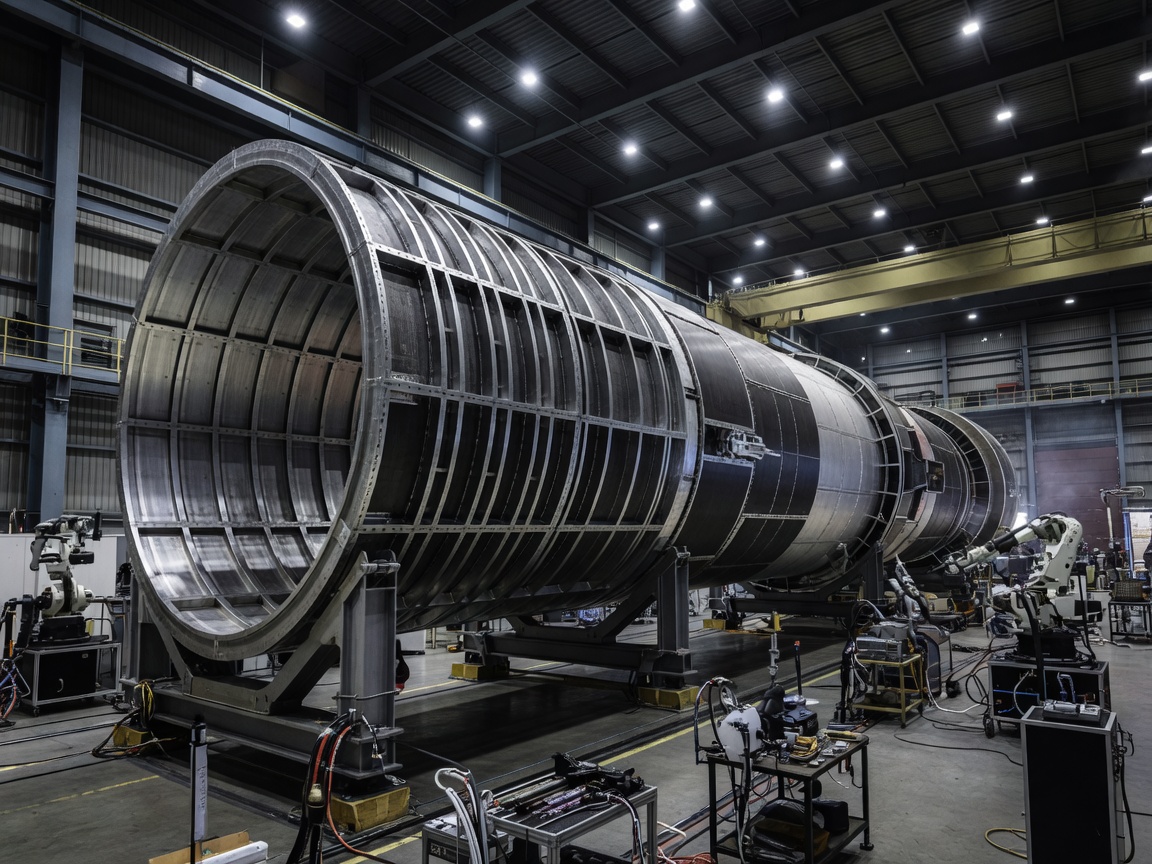
A launch vehicle is essentially a massive balloon made of thin metal or carbon composite, filled with explosive liquids, resting atop a controlled explosion. The structural skin of some rocket tanks is measured in millimeters. To maintain structural integrity, many rockets rely on internal pressurization. Without the pressure of the fuel and inert ullage gases (like helium or nitrogen) pushing outward, the rocket would crumple under its own weight on the launch pad.
During ascent, the vehicle encounters "Max-Q," the point of maximum aerodynamic pressure. Here, the vehicle's increasing speed creates massive aerodynamic drag that peaks before the thinning atmosphere reduces the load. The structure must be rigid enough to survive Max-Q while remaining incredibly lightweight, a paradox that defines aerospace engineering.