Reusable Rocket Technology
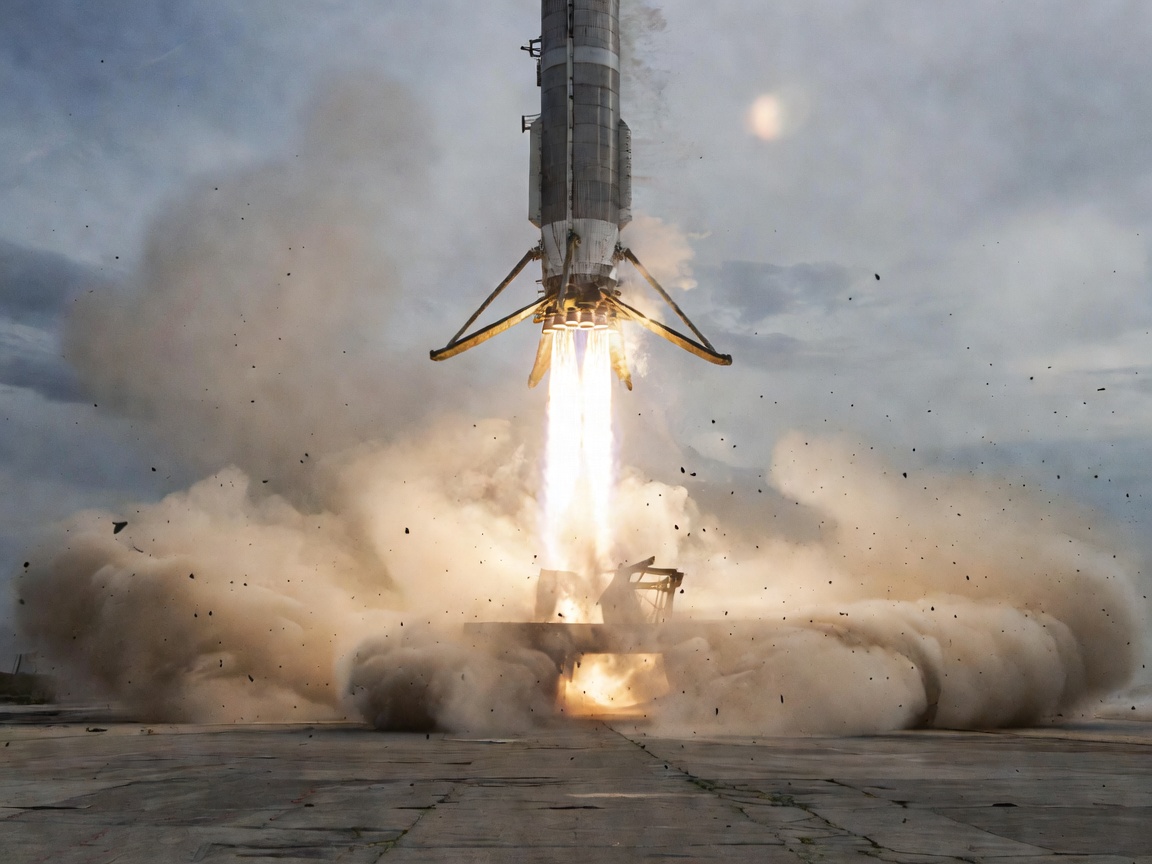
Rewriting the Economics of Spaceflight
For decades, orbital access was strictly an expendable affair. Multimillion-dollar launch vehicles were constructed, flown for mere minutes, and allowed to crash into the ocean or burn up in the atmosphere. This paradigm treated orbital rockets as disposable ammunition rather than commercial aircraft. The advent of viable, routine reusable rocket technology has permanently altered the aerospace trajectory.
Achieving reusability is not a trivial task of simply adding a parachute. Because orbital rockets ascend at hypersonic speeds and leave the dense atmosphere, returning them intact requires a complex orchestration of retropropulsion, advanced aerodynamics, and robust structural engineering.
The Mechanics of Retropropulsion
Unlike orbital capsules which use blunt-body ablation shields to dissipate heat, returning first stages utilize the atmosphere to their advantage while relying on their own engines for deceleration. This process is known as supersonic retropropulsion. Firing an engine into a supersonic airstream creates a bow shock ahead of the vehicle, which paradoxically helps to deflect extreme heat away from the fragile engine bells.
A typical recovery profile requires three distinct engine burns:
- The Boostback Burn: Following stage separation, the booster flips and fires its engines to cancel its forward momentum and direct itself back toward the launch site or a downrange recovery vessel.
- The Reentry Burn: As the booster hits the thicker layers of the atmosphere, it fires again. This minimizes aerodynamic stress and heat on the vehicle, preventing structural failure.
- The Landing Burn: Seconds before impact, a final precisely calculated burn decelerates the vehicle to zero velocity precisely as it touches the landing pad.
Grid Fins and Aerodynamic Control
During the descent through the atmosphere, the engines are off for the majority of the fall. To steer the empty cylinder—falling engines-first—engineers utilize grid fins. These open-latticework aerodynamic control surfaces remain folded against the fuselage during ascent to minimize drag, deploying only after stage separation.
Unlike traditional planar fins, grid fins maintain excellent control authority at hypersonic, transonic, and subsonic speeds. As the vehicle falls, hydraulic or electric actuators pivot these fins to steer the booster's center of pressure, gliding it toward the landing zone with extraordinary precision.
Thermal Protection and Fatigue
The primary barrier to rapid turnaround times is thermal degradation. Even with a reentry burn, the base of the rocket is subjected to intense heat from both the atmospheric friction and its own engine plumes reflecting off the landing pad. Heat shields, specialized paints, and robust engine nozzle materials must withstand extreme thermal cycling.
Furthermore, engine turbopumps and combustion chambers suffer from low-cycle fatigue due to massive pressure and temperature swings during multiple firings. Inspecting and refurbishing these components dictated the slow turnaround of historical reusable systems like the Space Shuttle. Modern systems aim to eliminate refurbishment entirely, striving for an "inspect and fly" operational tempo akin to commercial aviation.